
Push-back Racking
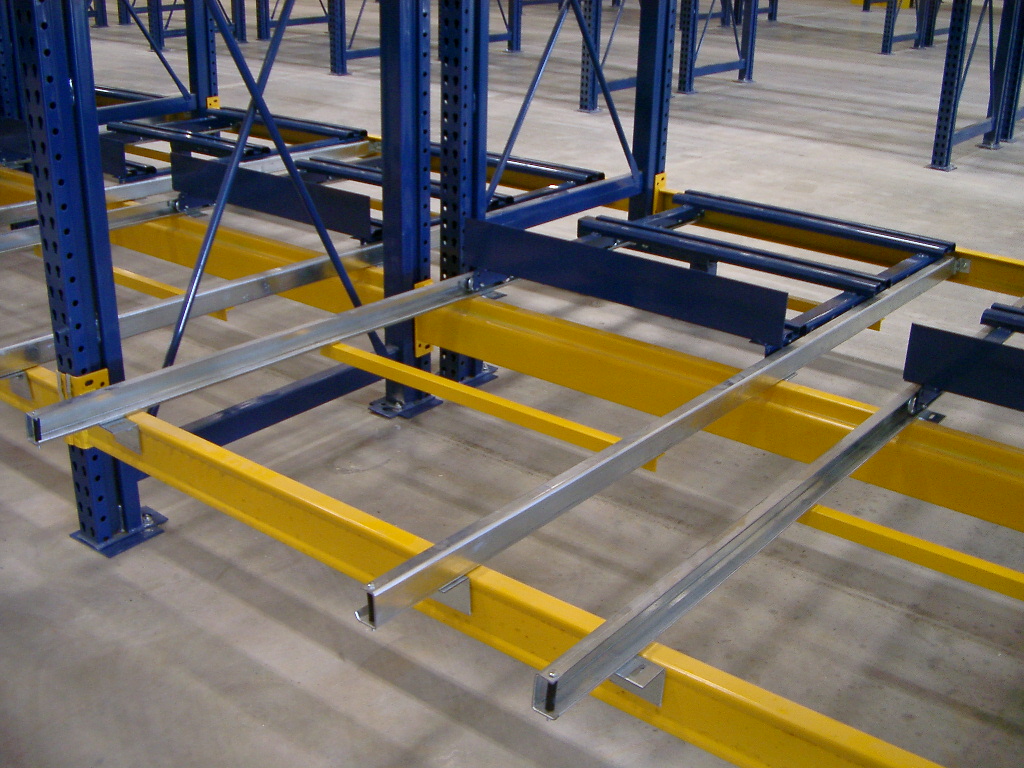
Push-back pallet racking is a high-density storage system that uses inclined rails and rollers or carts to store multiple pallets deep within a single lane. Pallets are loaded and retrieved from the same aisle using a last-in, first-out (LIFO) sequence. Speedrack's engineered roller push-back systems increase storage density while maintaining efficient pallet access.
Key Features
- 2–6 pallet-deep storage per lane
- Gravity-assisted pallet return
- Efficient for Last-In, First-Out (LIFO) inventory
ADVANTAGES
- High storage density with fewer aisles
- Faster pallet handling than drive-in systems
- Reduced forklift entry into the rack structure
Considerations
- Higher initial cost than selective racking or Drive-In
- Requires consistent pallet conditions
Industries
- Retail distribution, consumer goods, automotive, high-throughput warehouses
Frequently Asked Questions
How does push-back pallet racking work?
Pallets are loaded onto an inclined roller or cart system. As additional pallets are loaded, they push previously stored pallets farther into the lane. When the front pallet is removed, gravity moves the remaining pallets toward the picking position.
What is the difference between push-back and drive-in racking?
Push-back racking allows forklifts to load and unload pallets from the aisle without entering the rack structure. Drive-in racking requires forklifts to travel into storage lanes. Both offer high-density storage, but push-back systems generally provide faster access to multiple storage lanes.
Does push-back racking use FIFO or LIFO inventory rotation?
Push-back racking uses LIFO inventory rotation because the most recently loaded pallet is the first one retrieved from a lane.
What types of warehouses benefit from push-back racking?
Push-back racking is well suited for warehouses with multiple pallets per SKU, limited floor space, and a need for efficient pallet handling. Common applications include food and beverage, manufacturing, and distribution operations.


