Pallet Flow Racking
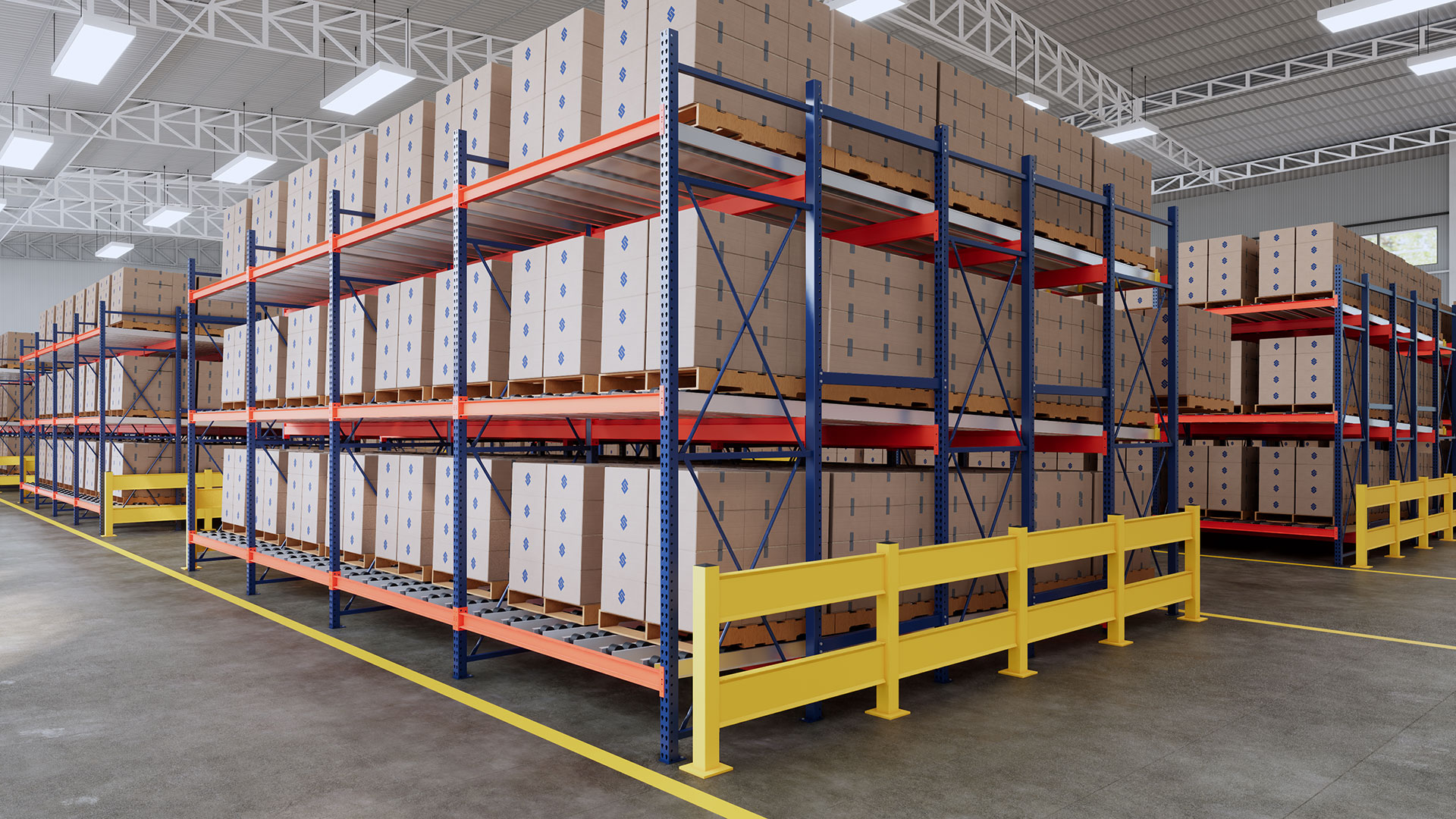
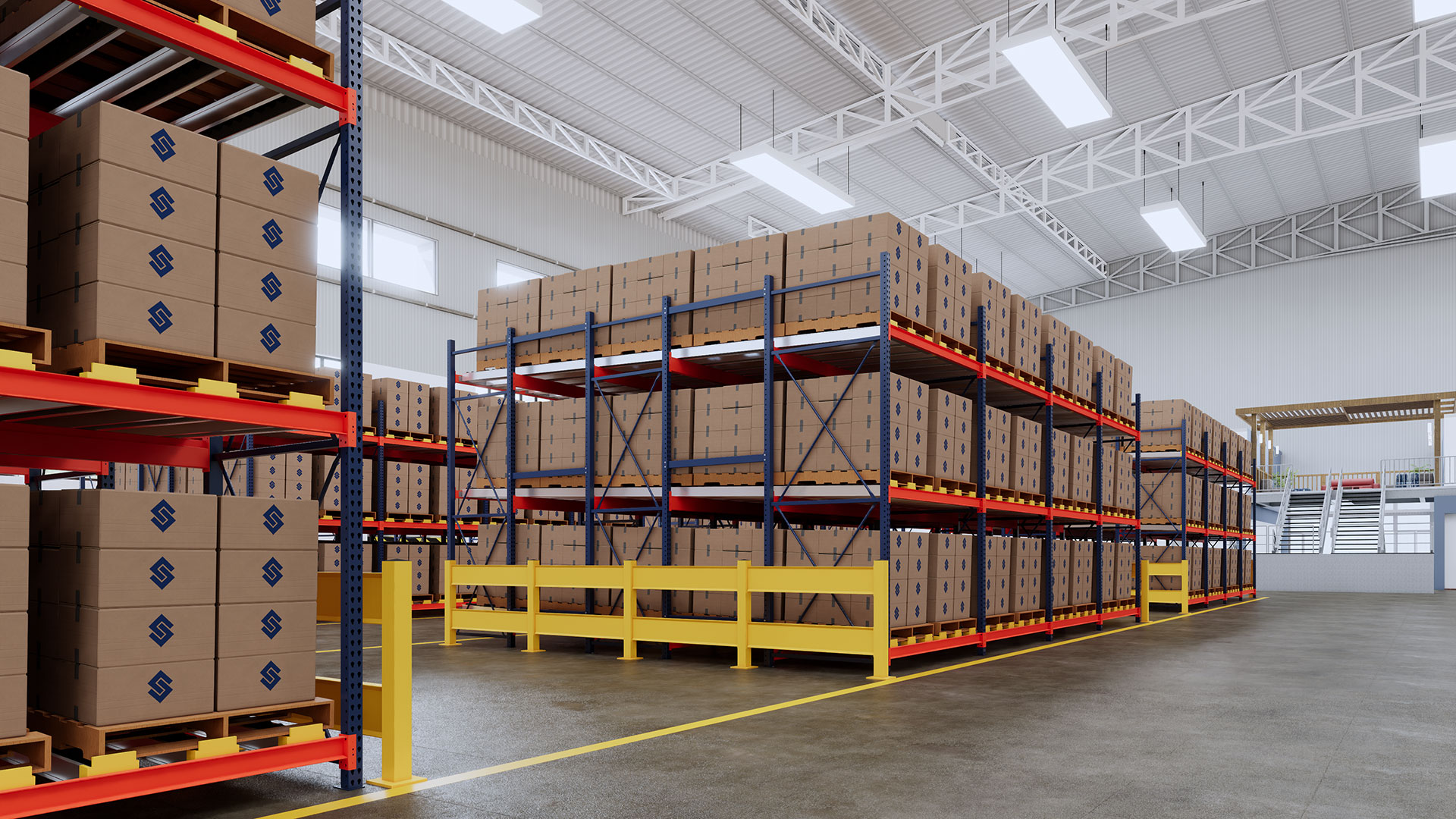
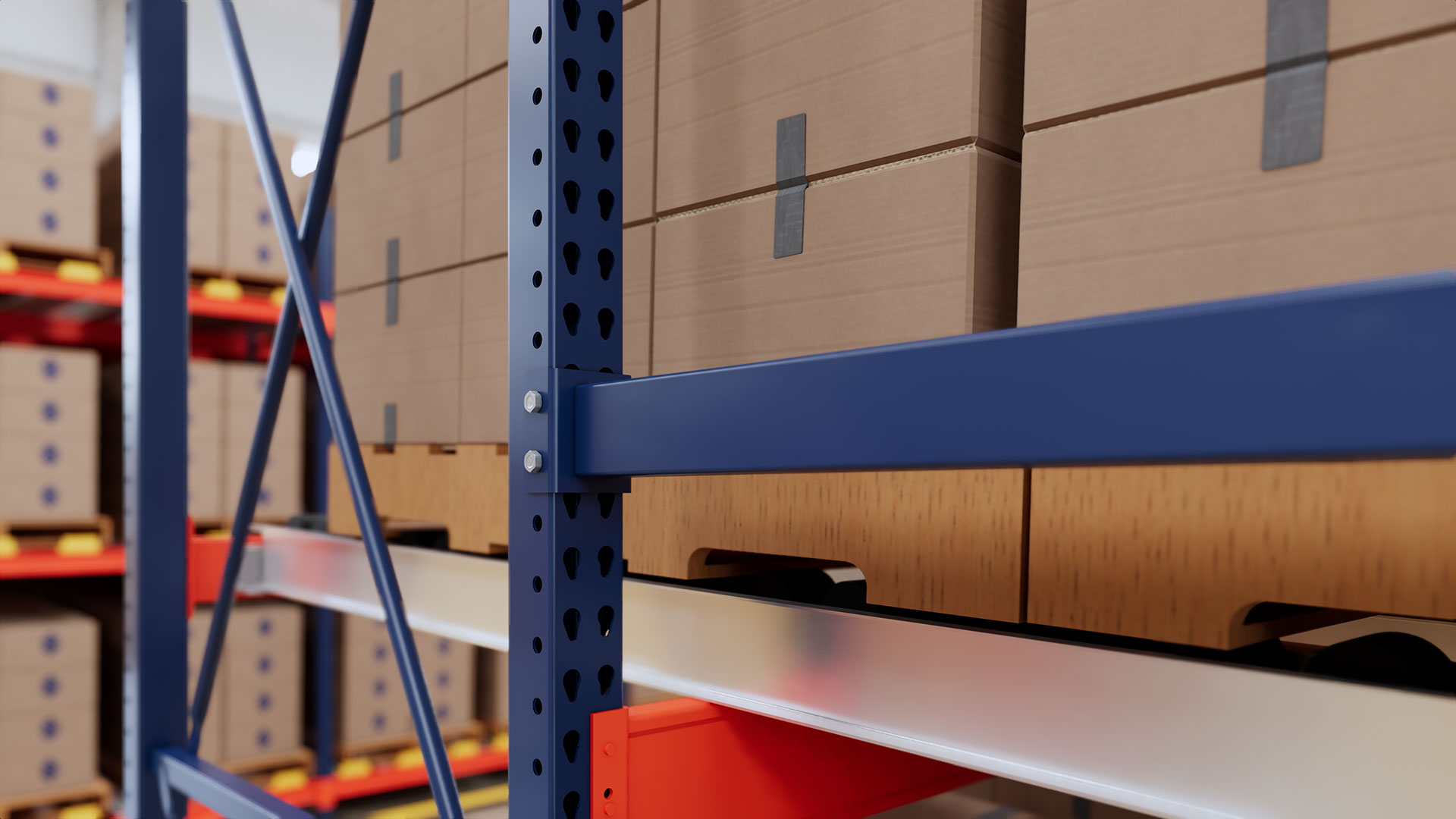
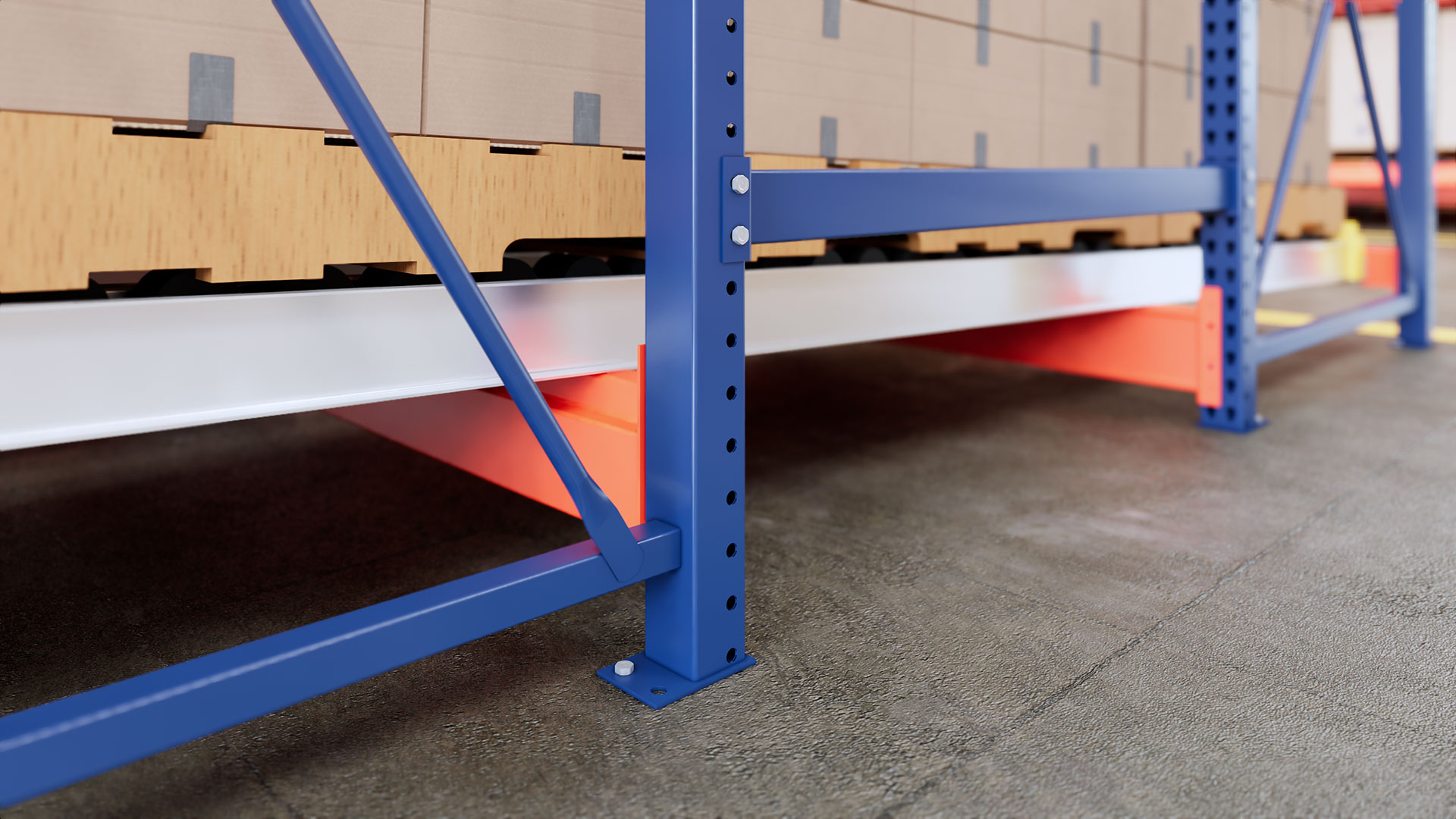
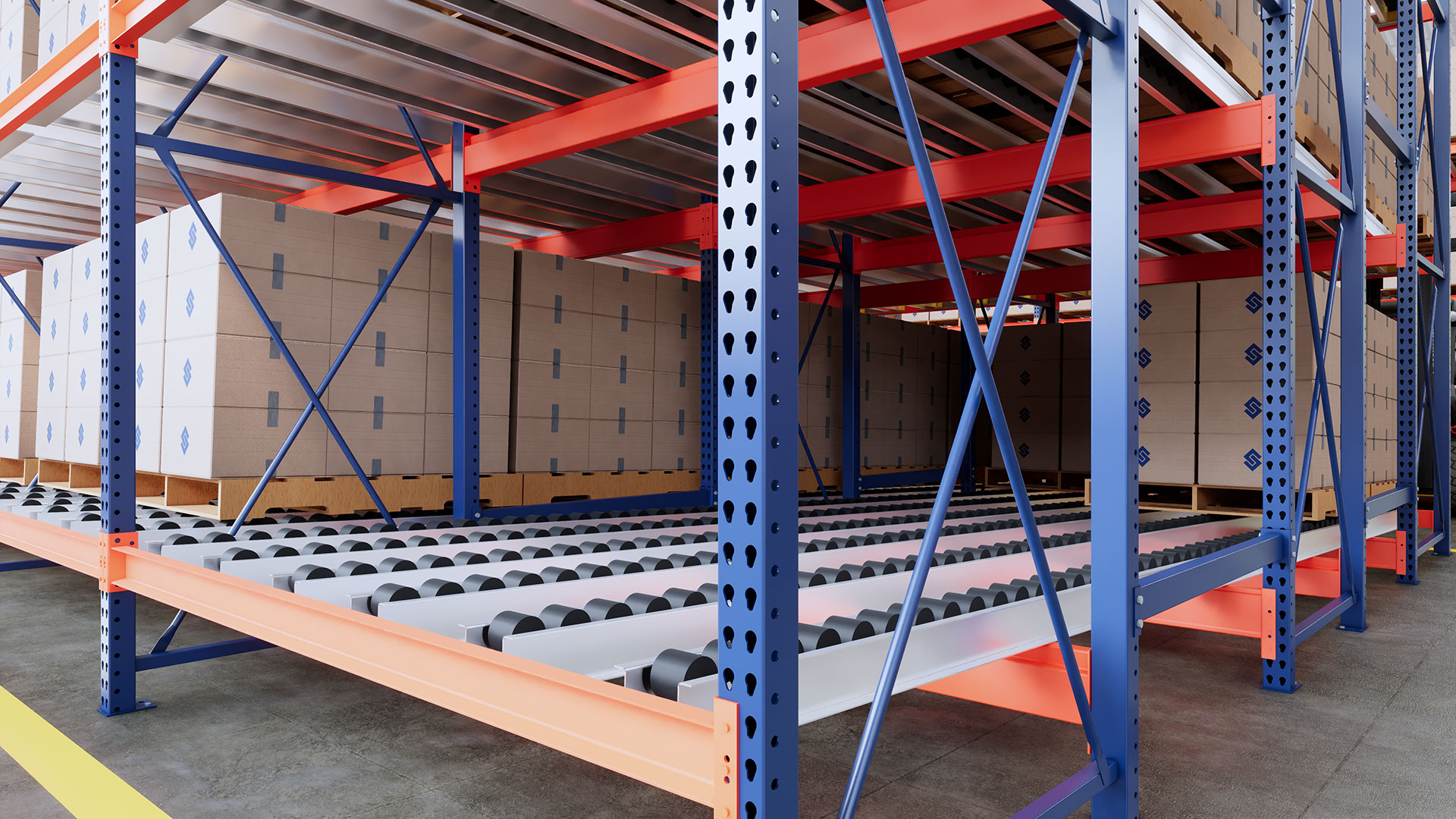
Pallet flow racking is a high-density storage system that uses gravity-fed rollers to move pallets through inclined storage lanes. Pallets are loaded from one end and retrieved from the opposite end, automatically supporting first-in, first-out (FIFO) inventory rotation. Speedrack's engineered flow storage solutions help warehouses improve inventory management, storage density, and operational efficiency.
Key Features
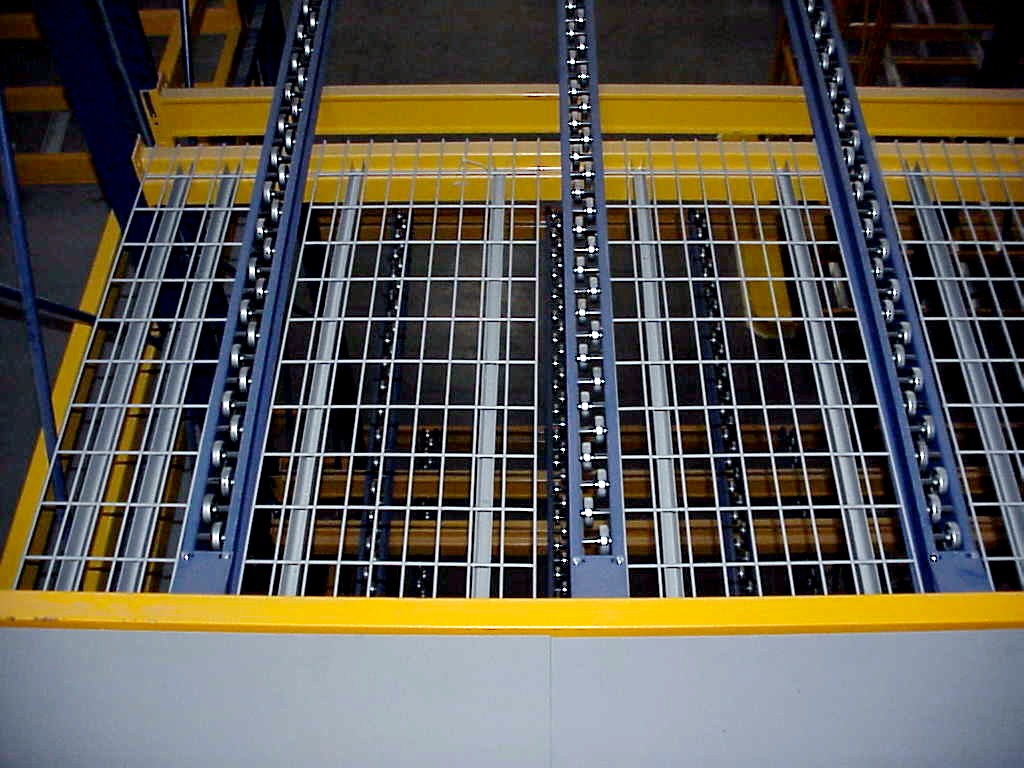
- Roller tracks with speed controllers for controlled pallet flow
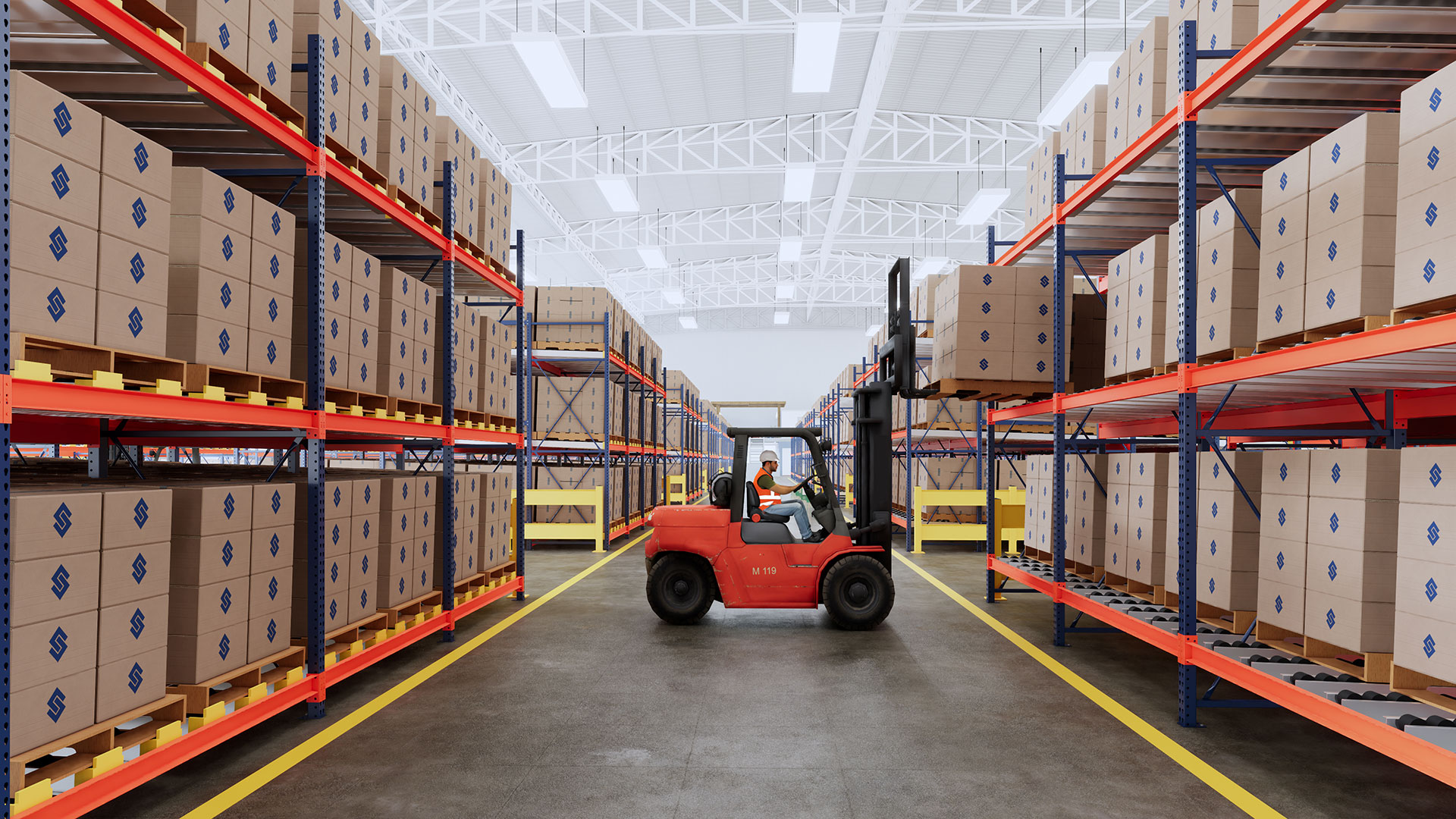
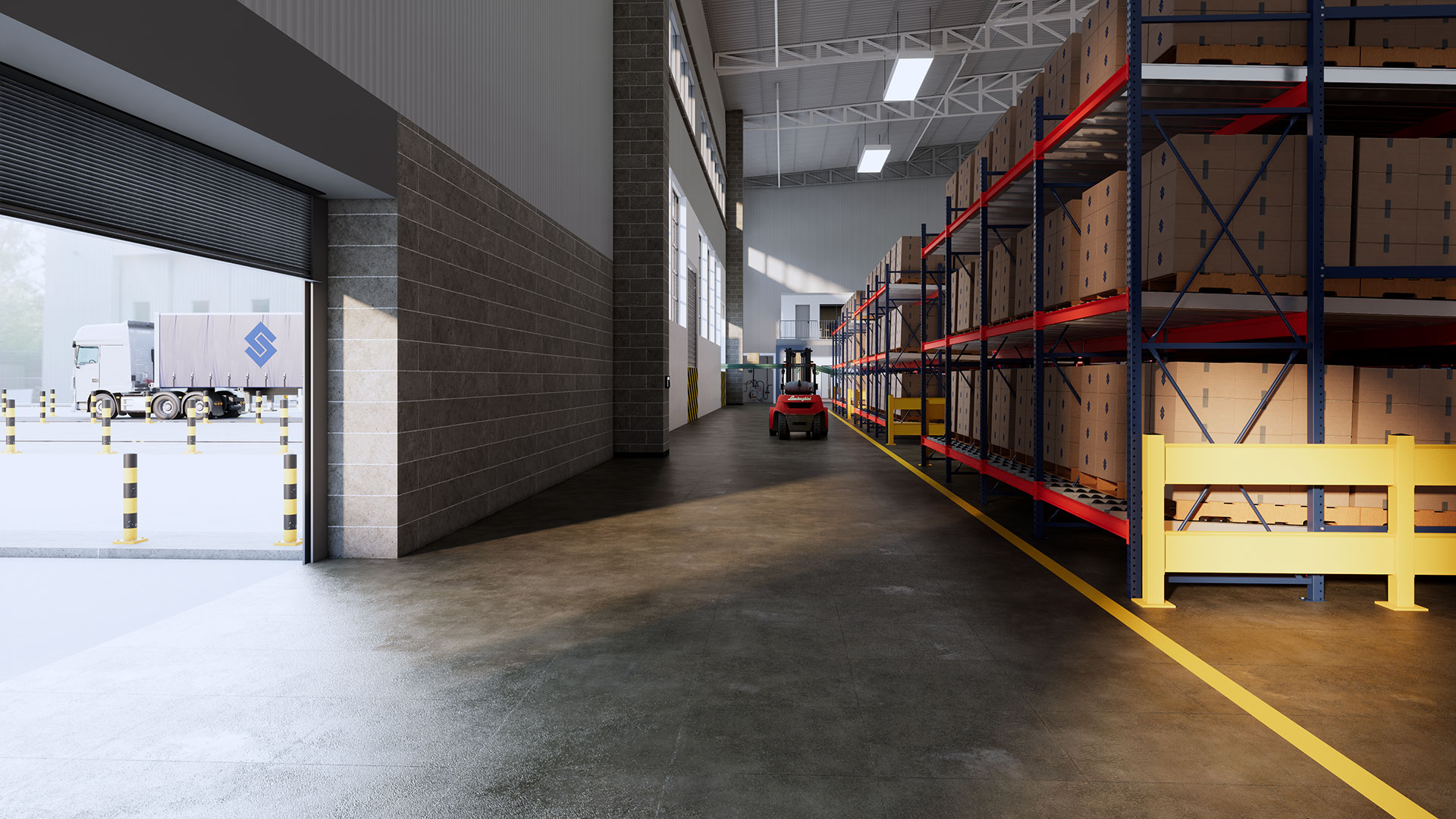
- Separate load and pick aisles
- High-density storage
ADVANTAGES
- True FIFO inventory rotation
- High throughput and improved picking efficiency
- Excellent space utilization
Considerations
- Higher system complexity and initial cost
- Requires consistent pallet quality
- More detailed engineering and installation
Industries
- Food distribution, pharmaceutical, cold storage, high-turnover facilities
Frequently Asked Questions
How does pallet flow racking work?
Pallets are loaded onto slightly inclined roller lanes and move toward the unloading end using gravity. Speed controllers and braking components help regulate pallet movement, allowing inventory to advance as pallets are removed.
What is the difference between pallet flow and push-back racking?
Pallet flow racking typically supports FIFO inventory rotation, with loading and unloading occurring at opposite ends. Push-back racking uses LIFO rotation, with both operations performed from the same aisle.
What industries use pallet flow racking?
Pallet flow systems are commonly used in food and beverage distribution, cold storage, manufacturing, and high-volume distribution centers where inventory rotation and storage density are important.
Can pallet flow racking improve warehouse efficiency?
Yes. Pallet flow systems reduce unnecessary forklift travel, support automatic inventory rotation, and create dedicated loading and unloading areas. These features can improve material handling efficiency and help maintain organized inventory movement.