
If a warehouse expansion, new distribution center, or storage system is on your roadmap, evolving building codes could affect more than your rack design. They may also influence your project budget, engineering timeline, and permitting process.
As jurisdictions across the country adopt the 2024 International Building Code, racking systems in those locations will be required to meet ANSI/RMI MH16.1:2021. That updated standard introduces a new methodology for evaluating rack stability, and systems designed under it may look different from those installed just a few years ago.
Here’s what warehouse owners and operators should know as they plan upcoming projects.
What's Changing?
The 2024 IBC references the 2021 edition of the Rack Manufacturers Institute (RMI) design specification: ANSI/RMI MH16.1.
This updated engineering methodology introduces additional stability evaluations and second-order analysis, helping engineers better understand how rack systems behave under real-world loading conditions.
For warehouse owners, the important takeaway isn’t necessarily how those calculations are performed, but how they can affect the components, configuration, and cost of the finished rack system.
What Does This Mean for Your Project?
Depending on your location and the building code adopted by your local Authority Having Jurisdiction, your rack system may require:
- Larger base plates
- Larger or different beam-to-column connections
- Changes to anchor requirements
- Changes to upright or beam selection
- Adjustments to the overall rack configuration
These design changes can affect material requirements and overall rack system cost. In some applications, designs under MH16.1:2021 may increase rack system costs by approximately 10–15%, although the impact can vary significantly based on configuration, loading, seismic requirements, and other project-specific factors.
Why Similar Projects May Receive Different Designs
One challenge during this transition is that building code adoption varies across North America. Some jurisdictions have already adopted the 2024 IBC. Others continue to use earlier editions.
That means two nearly identical warehouses could require different engineering depending on where they’re located.
“We’ve seen projects quoted under one edition of the building code, only to have the local jurisdiction adopt the 2024 IBC before the project moved forward. That can mean re-engineering and re-quoting the system under the new standard. The earlier we understand which code will apply, the better we can help customers plan for those requirements and avoid surprises later.”
Dan Rozycki, Vice President of Sales & Marketing, Speedrack Products Group

Why Early Planning Matters
One of the most important things a warehouse professional can do is establish the exact project location and permitting requirements as early as possible. Because the updated methodology can require additional engineering analysis and design iterations, warehouse projects may involve:
- Additional engineering review
- Longer quotation timelines
- Earlier permitting discussions
- More coordination between owners, distributors, engineers, and manufacturers
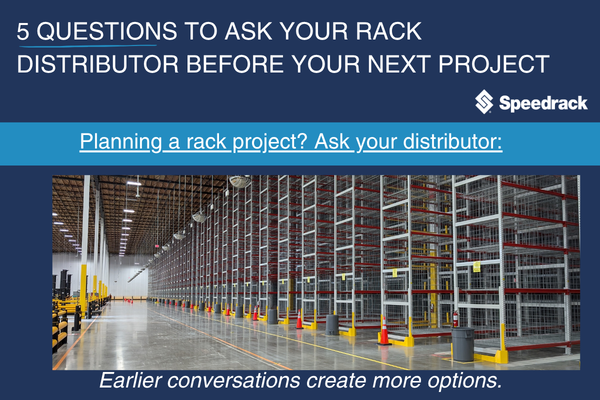
- Confirming the applicable building code gives your distributor and rack manufacturer a clearer design basis from the start. That can reduce the risk of redesign, unexpected cost increases, and delays later in the project.
Should You Design to the Latest Standard?
Some companies may choose to design to the latest engineering standard even before it’s required in their jurisdiction. In other cases, designing to the currently adopted building code may be the most practical and cost-effective approach.
The right decision depends on things like your project schedule, budget, future expansion plans, and the building code enforced by your local Authority Having Jurisdiction (AHJ).
Designing to the latest standard may:
- Reduce the likelihood of redesign if local codes change before permitting.
- Provide greater flexibility for future rack modifications or facility changes.
There are tradeoffs, however. Designing to the latest standard may increase initial system cost and, in some applications, affect the load capacity or configuration that can be achieved.
If your jurisdiction has not adopted the 2024 IBC, designing to the currently adopted standard may be the more practical and cost-effective approach. Working with an experienced rack manufacturer, distributor, and engineering team can help you evaluate the risks and determine the appropriate design approach for your specific project.
Engineering Makes the Difference
Building codes are only one part of a successful warehouse storage project, but determining which code applies can influence decisions throughout the design process.
At Speedrack, our engineering team works closely with our distributor partners to evaluate project requirements, understand the applicable code, and develop a rack system designed for your specific facility and application. Understanding those requirements from the start gives you more time to evaluate your options, account for potential cost and design implications, and make informed decisions before your project reaches the permitting stage.